Balancing Act: Navigating the Future of California’s Electric Grid
A blog post on the future of California's electric grid
Click here to download the PDF version of this article.
Introduction
California has long been a leader in environmental policy, pioneering strict regulations on emissions and promoting renewable energy sources like solar and wind power. The state’s ambitious goals, including the aim to become carbon neutral by 2045, have set a benchmark for other states and countries. However, California faces significant challenges in energy management, including balancing the growing demand for electricity with the intermittent nature of renewable energy sources and aging infrastructure.
These challenges are compounded by environmental issues such as droughts and wildfires, which both strain and are exacerbated by energy policies. Therefore, California’s management of its electric grid necessitates a balanced approach that harmonizes environmental conservation with the increasing energy demands of its population and economy. This involves integrating renewable energy sources effectively while ensuring grid reliability and mitigating impacts like wildfires, all without compromising environmental goals. Such a balance is essential to address both the immediate energy needs and the long-term sustainability of the state.
Current State of California Electric Grid and Energy Fuel Mix
Grid Infrastructure Overview
California’s electric grid is undergoing significant transformation as the state progresses toward its goal of 100% clean electricity by 2045. The current state of the grid reflects a substantial increase in battery storage capacity, having reached 5,600 megawatts (MW), which can power approximately 4.2 million homes for up to four hours. This is a notable jump from just 500 MW in 2020. Further, the state has already built out 35,000 MW of clean electricity capacity, with plans to expand to 148,000 MW by 2045 1.
Energy Fuel Mix Analysis
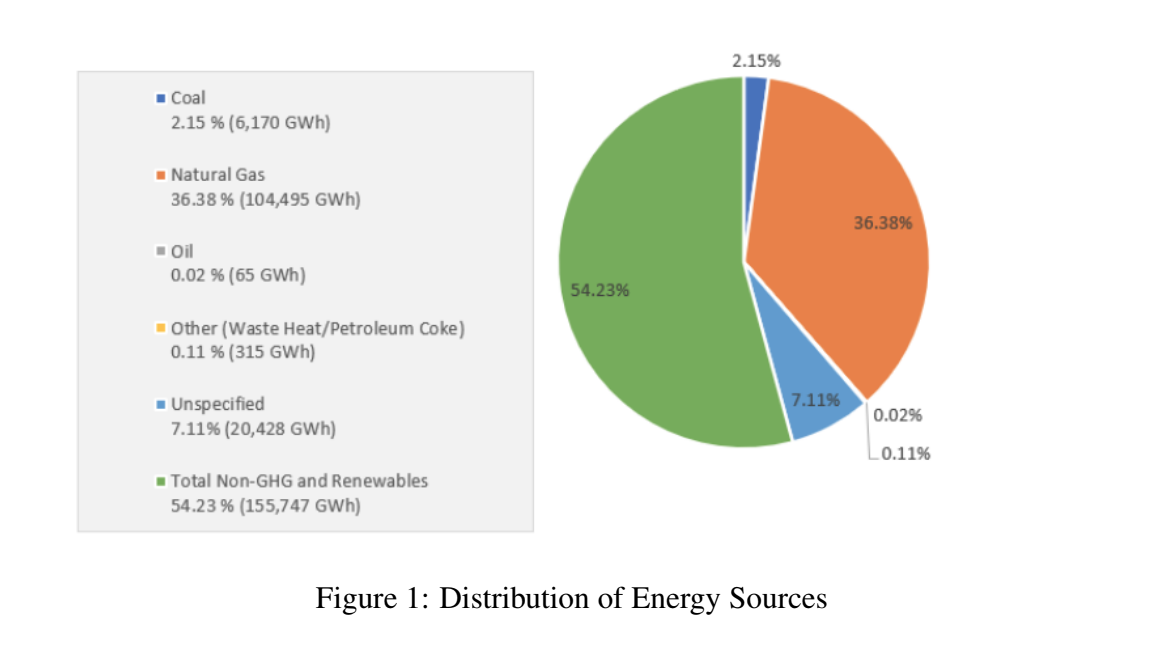
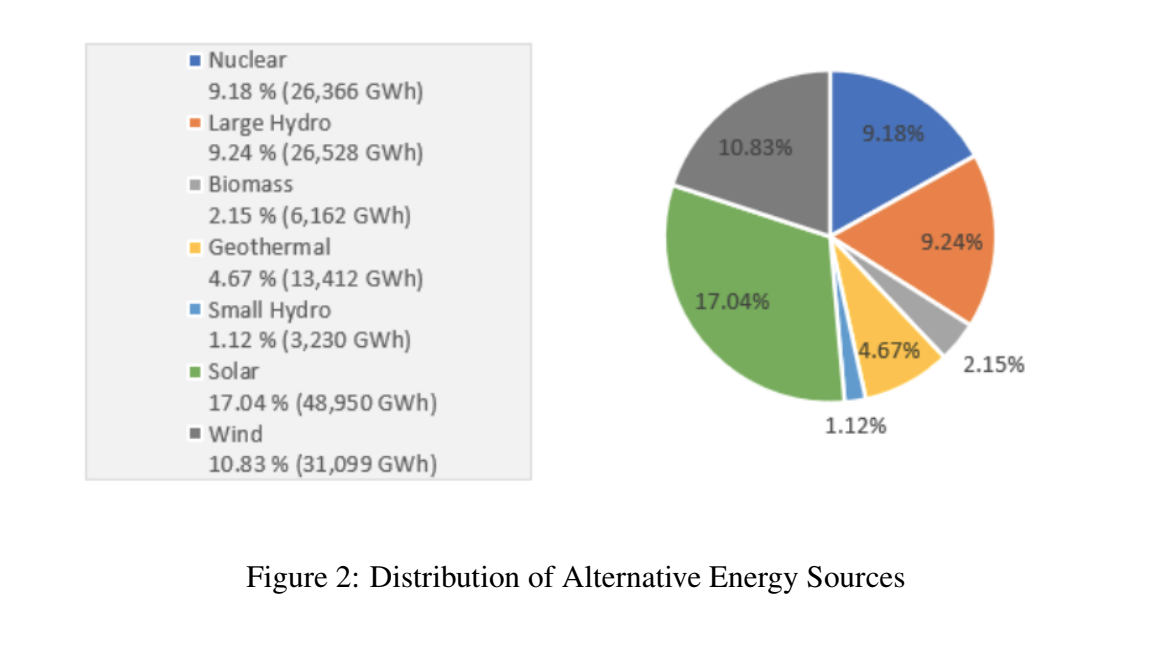
In terms of energy fuel mix, California’s energy portfolio shows a significant reliance on renewable and zero-carbon sources. As of 2022, 54.23% of the state’s energy came from renewable and zero-carbon resources. This includes 37.2% from renewables (with solar and wind being significant contributors), 9.24% from large hydroelectric power, and 9.18% from nuclear sources while the remaining 45.77% is derived from other sources, such as Coal, Natural Gas, Oil and so on 2.
Challenges and Opportunities
However, California faces unique challenges due to this specific energy mix and its geographical conditions. The state’s dependency on renewable sources like solar and wind, which are intermittent by nature, requires robust storage solutions and a flexible grid system. The energy demand is also expected to increase significantly in the coming years, partly due to the adoption of electric vehicles (EVs). It’s estimated that electricity production may need to increase by up to 85% by 2045 to meet these demands, with the generation capacity potentially needingto triple 3. Additionally, California’s climate, characterized by hot summers and the prevalence of droughts and wildfires, further stresses the grid, especially during peak hours when energy usage spikes.
To address these challenges, California is investing in modernizing its grid infrastructure, including a significant build-out of battery storage and an expansion of the transmission network. The state’s plan includes adding 70 GW of new power to the grid by 2033, rising to 120 GW by 2045. This modernization aims not only to accommodate the increasing demand and integrate renewable sources more effectively but also to ensure grid reliability in the face of environmental challenges 4.
Overall, California’s approach to managing its electric grid reflects a commitment to balancing environmental sustainability with the growing and evolving energy needs of its population and economy.
Environmental and Power Implications of Maintaining the Current State of California Electric Grid
Without significant changes, California’s current energy mix and grid management approach could lead to environmental and power-related challenges, including higher carbon emissions, grid reliability issues, and difficulty in meeting long-term sustainability goals. The state’s efforts to transform its energy sector are crucial in addressing these challenges.
Carbon Emissions and Climate Impact
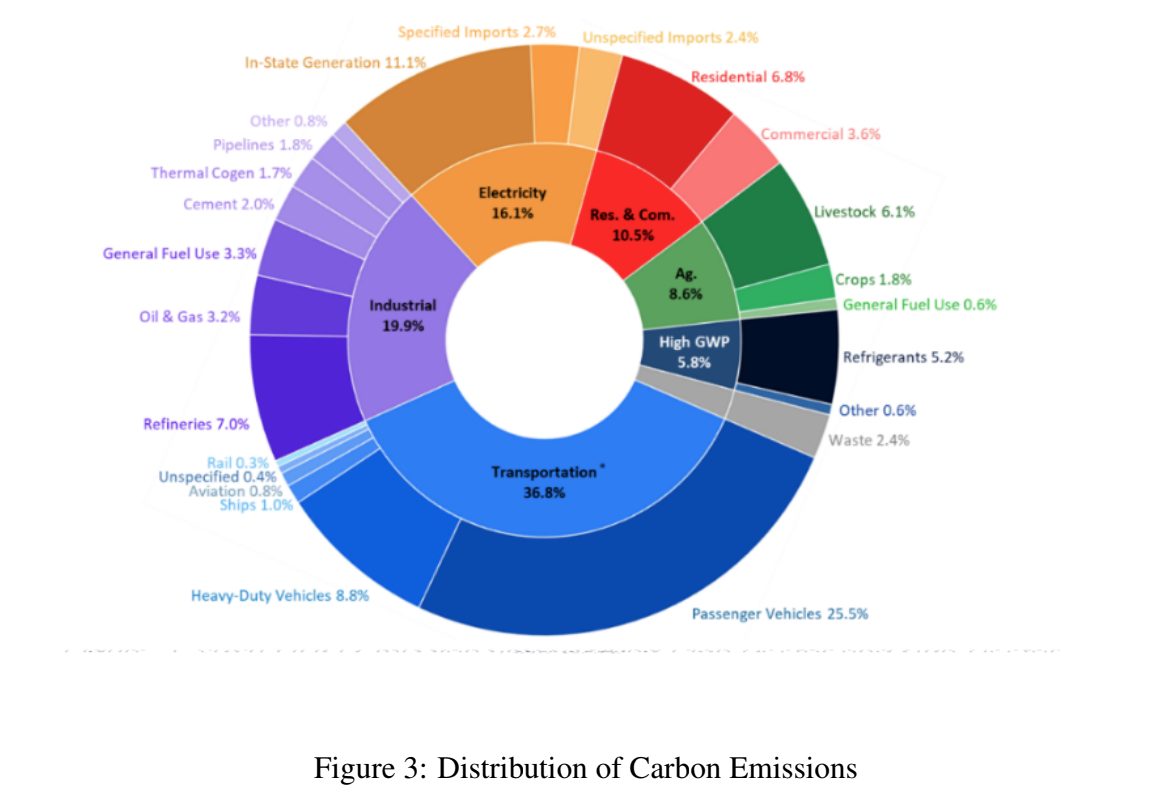
According to a California Air Resources Board report, emissions from GHG emitting activities statewide in \(2020\) were \(369.2\) million metric tons of carbon dioxide \(CO_{2}\) equivalent \((MMTCO_2e)\), \(35.3 (MMTCO_2e)\) lower than \(2019\) levels and \(61.8 (MMTCO_2e)\) below the \(2020\) GHG Limit of \(431 (MMTCO_2e)\). The transportation sector showed the largest decline in emissions at 36.8 percent while electricity and industry take other parts of the total emissions, which are 16.1 percent and 19.9 percent respectively 5.
California’s current energy mix includes a significant portion of non-renewable sources, with natural gas accounting for 47.46% of its total system electric in-state generation in 2022. Total Non-GHG and Renewable energy sources, while growing, accounted for 52.22% of the total system mix 2. This reliance on fossil fuels contributes to carbon emissions, affecting the state’s ability to meet its climate goals. The state’s latest greenhouse gas data indicates a need for continued efforts to achieve carbon neutrality by 2045, as emissions remain effectively flat compared to previous years. Reducing emissions from the transportation sector, which is a major source of greenhouse gases, is a critical part of the state’s strategy.
Reliability Concerns
The intermittent nature of renewable sources like solar and wind poses challenges to grid stability. Battery storage capacity, though increasing, may still be insufficient to manage the fluctuations in renewable energy generation effectively. This could lead to reliability concerns, especially during peak demand periods or extreme weather events. California’s grid needs to balance the integration of renewables with maintaining a stable power supply.
Long-Term Projections
If significant changes are not made, the long-term implications could include increased emissions, contributing to climate change, and failing to meet carbon neutrality goals. Reliability issues could become more frequent, with potential power shortages during high-demand periods. Continued reliance on non-renewable sources might also hinder the state’s transition to a more sustainable energy future. However, California is actively working to change this trajectory, with plans and policies aimed at increasing renewable energy generation, improving grid stability, and reducing emissions, as indicated in the state’s Scoping Plan and other climate action initiatives.
Recommended Actions for a Sustainable Future
The increasing reliance on renewable energy sources, while crucial for mitigating the effects of climate change, presents unique challenges for the reliability and stability of California’s electric grid. As an example, wind energy is contributing 7.2% to California’s energy mix in 2020 and is a vital component of the renewable portfolio. However, the variable nature of wind energy calls for strategic placement of wind farms and advanced forecasting methods to maximize output and integrate it effectively into the grid. Investments in technology to improve the efficiency of wind turbines and the development of offshore wind farms could significantly enhance the contribution of wind energy.
The intermittent nature of renewable energy sources, particularly solar and wind power, necessitates a comprehensive approach that ensures consistent energy availability, even when natural resources are insufficient. Hence embracing diverse sources of renewable energy is a crucial step in this sustainable transformation.
Geothermal Energy is one of those diverse sources. California’s abundant geothermal resources, stemming from its location on the Pacific’s Ring of Fire, present a significant opportunity. In 2020, geothermal energy contributed 5.94% to the state’s energy production, with an installed capacity of 2,712 megawatts. Unlike solar and wind, geothermal energy offers a more constant and reliable power source, making it a critical component in the renewable energy mix. Expanding geothermal capacity can provide a stable base-load power, essential for balancing the intermittency of other renewable sources.
Hydropower is also a promising source to diversify sustainable energy portfolios. As a mature and sustainable technology, hydropower plays a crucial role in California’s energy landscape. Hydropower’s ability to provide rapid response to fluctuations in demand and supply makes it an invaluable asset for grid stability. The enhancement of existing hydropower infrastructure and the exploration of new, environmentally sensitive hydropower projects could bolster California’s renewable energy capacity while maintaining ecological balance.
Another facet of transformation to a sustainable future is addressing grid integration and distribution challenges. Decentralized renewable energy systems are an important direction to move towards a better sustainable future. The shift towards localized renewable energy systems, such as residential solar panels and biogas plants, brings the generation closer to the consumer. This decentralization offers numerous benefits, including reduced transmission losses and increased energy independence for consumers. However, it also poses challenges for the traditional grid infrastructure, which was designed for unidirectional power flow. To integrate these systems effectively, California must invest in smart grid technologies that can handle bidirectional power flows and manage the distribution of energy from multiple, decentralized sources.
Moreover, all the abovementioned steps can be enhanced by upgrading grid infrastructure. The current grid infrastructure, often outdated and designed for a different era of energy generation, requires significant upgrades to accommodate the reverse power flows from localized renewable generators. This involves not only physical upgrades to transformers and other components but also the adoption of advanced grid management systems that can predict and balance the supply and demand of electricity in real time.
Energy Storage Solutions are also important besides the necessity of energy generation. Addressing the intermittency of renewable energy sources, particularly solar and wind, is paramount. Large-scale battery storage systems are key to capturing excess energy during peak production times and releasing it when demand is high or renewable generation is low. California should focus on expanding its energy storage capacity, including battery technologies, pumped hydro storage, and other innovative storage solutions. This will enable the state to harness the full potential of its renewable resources and provide a continuous, reliable energy supply.
Conclusion
In conclusion, California’s journey towards a sustainable energy future is marked by significant advancements and challenges. The state’s leadership in environmental policy, underscored by its ambitious goal to achieve carbon neutrality by 2045, sets a high standard in balancing ecological concerns with energy requirements. The substantial progress in expanding the electric grid capacity, notably through increased battery storage and clean electricity, is commendable. However, the current reliance on a mix of renewable and non-renewable energy sources, with natural gas still playing a substantial role, poses challenges in terms of carbon emissions and grid reliability.
References
-
California Gets Significant Boost for Battery Storage on Electric Grid, 2023. ↩
-
Race to zero: Can california’s power grid handle a 15-fold increase in electric cars?, 2023. ↩
-
California grid operator signs off on $7.3 billion of power lines, 2023. ↩
-
California greenhouse gas emissions for 2000 to 2020, 2023. ↩